@xiaokong
2016-06-21T08:58:09.000000Z
字数 1048
阅读 168
第十一次作业
摘要
人类对于天空的渴望使人们开始慢慢的了解宇宙,并且发现了宇宙间的天体都在运动着,运动着的天体因互相吸引和互相绕转,从而形成天体系统。万有引力和天体的永恒运动维系着它们之间的关系,组成了多层次的天体系统。天体系统有不同的级别,按从低到高的级别,依次为地月系,太阳系,银河系,和总星系。
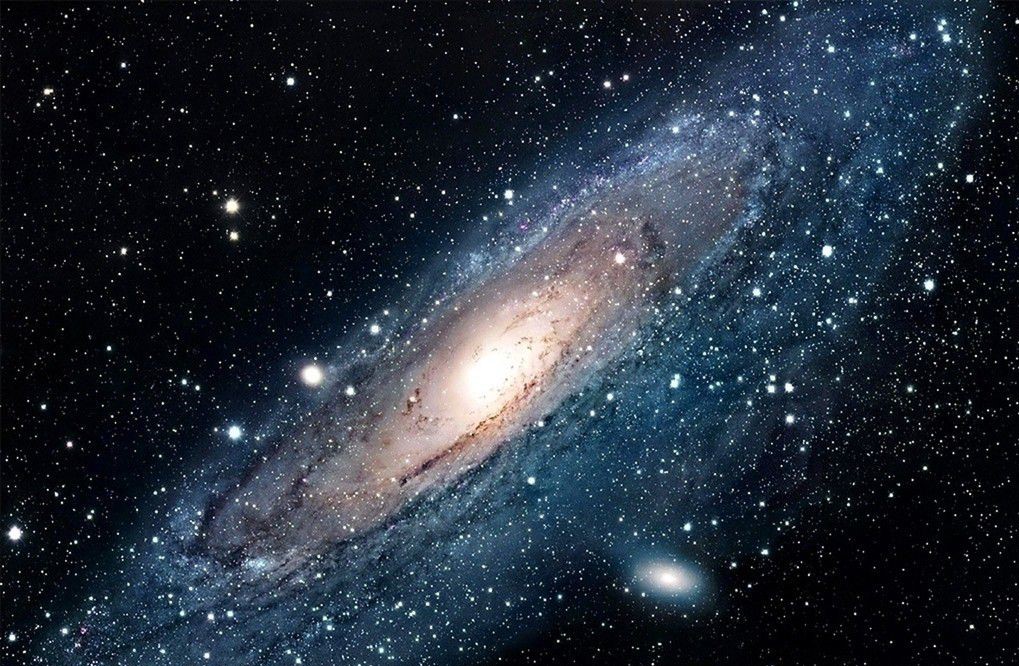
美丽的星系
背景
太阳系是以太阳为中心,和所有受到太阳的引力约束天体的集合体。包括八大行星(由离太阳从近到远的顺序:水星、金星、地球、火星、木星、土星、天王星、海王星 )、以及至少173颗已知的卫星、5颗已经辨认出来的矮行星和数以亿计的太阳系小天体。
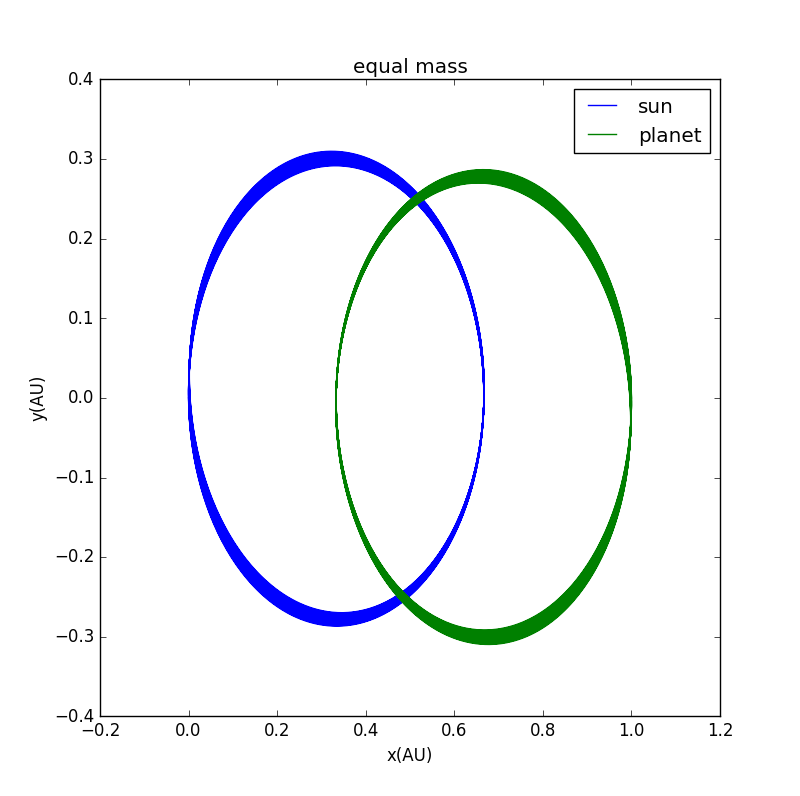
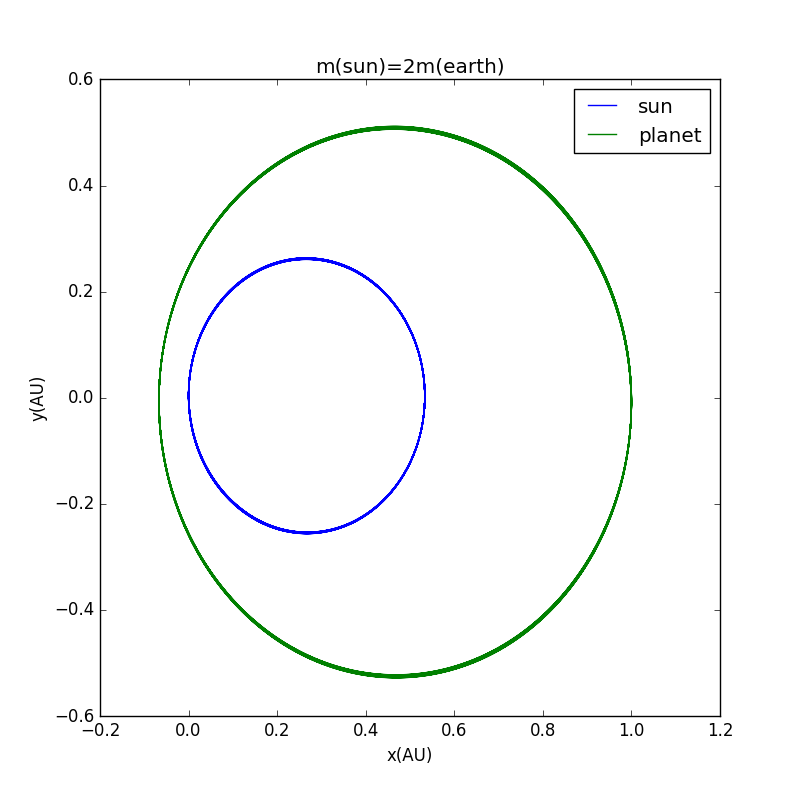
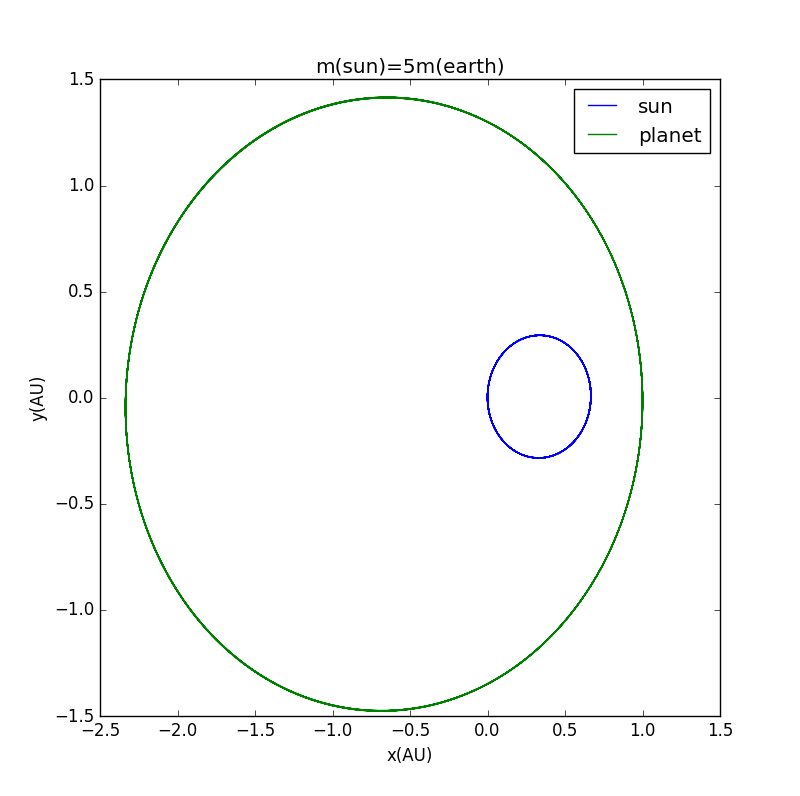
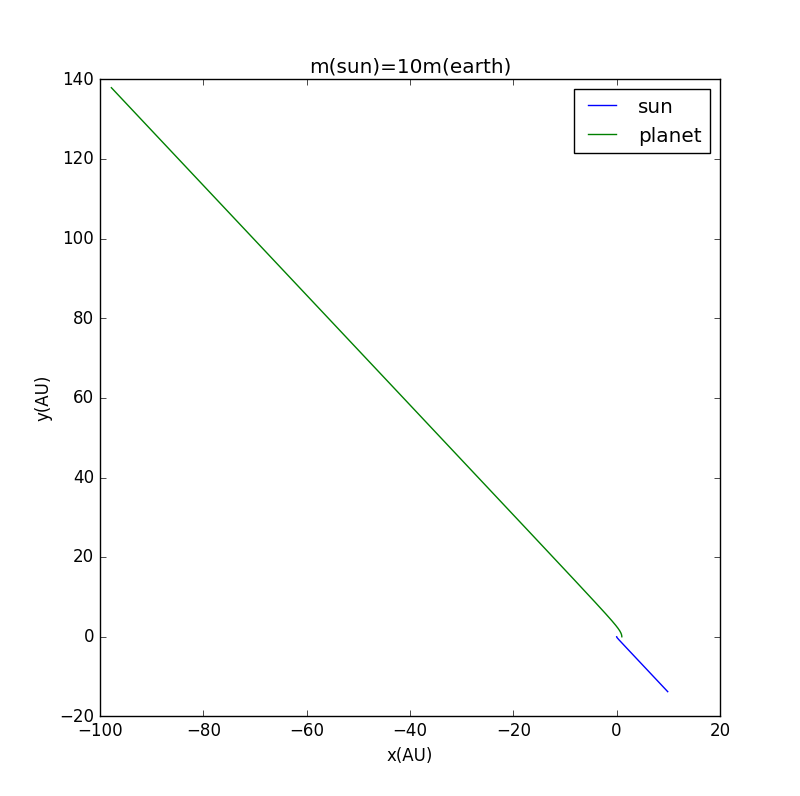
4.7 Consider a hypothetical solar system consisting of a sun and one planet in which the mass of the sun is not much greater than the mass of the planet. Now you must allow for the motion of both the planet and the sun. Extend your planetary motion program to include this effect. You will have to deal with a set of equations such as those in (4.7) for both objects. Investigate the possible types of orbital motion found in such a system. Begin with a double star system in which the two objects are of equal mass. Then explore the behavior when the masses are unequal.
对于两体运动,由两体运动的相对运动方程:
,G为万有引力常数。令
则
天体一相对天体二的运动方程式分量式:
正文
为使问题简化,我们在质心系下研究两体问题。
程序代码
总结
在两体问题中,质量小的行星绕质量大的行星做椭圆轨道运行,当小行星质量差变大时它的运动范围也会相应变大。而且内部的质量较大的行星也做椭圆轨道运行,运动范围也会变大。
致谢
吴雨桥同学的代码
